
Cold Organic Coffee Perfect for Hot Summer Days
 Greenfield, MA- To help coffee drinkers switching from hot to cold coffee during the hot summer months, the Organic Coffee Collaboration, a project of the Organic Trade Association (OTA), is providing seven delicious cold organic coffee recipes. These include iced coffee, malteds, and even cold coffee shakes blended with avocado! The organic coffee drinks can be made with organic decaffeinated, caffeinated, flavored and instant coffees widely available at retail outlets nationwide and direct from roasters via the Internet.
"With a cup of cold organic coffee, consumers can enjoy a delicious, high-quality summertime treat while supporting organic agriculture in the U.S. and around the world," said Caren Wilcox, OTA executive director.
Wilcox notes that in 2005, organic coffees won Cup of Excellence competitions in Bolivia, Brazil and Nicaragua. The prestigious award program, managed by the U.S.-based Alliance for Coffee Excellence, results in the selection of the best coffees produced in a particular country on the basis of their smell, taste and other exemplary characteristics.
Data from the soon-to-be-released Organic Trade Association's 2006 Manufacturer Survey indicate that United States organic coffee sales totaled $89 million in 2005, up 40 percent from the previous year. Similarly, awareness of organic coffee among American adults jumped 9 percent from 2003 to 2006 (from 42 to 54 percent), according to the National Coffee Association.
Organic coffee is grown using methods and materials that have a low impact on the environment. Organic production systems replenish and maintain soil fertility, reduce the use of toxic and persistent pesticides and fertilizers, and build biologically diverse agriculture. Third-party certification organizations verify that organic farmers use only methods and materials allowed in organic production. Organic coffee is grown in more than 30 countries, including the United States.
The Organic Coffee Collaboration includes: Arbuckle Coffee Roasters (Tucson, AZ), Café Bom Dia (Coral Gables, FL), Elan Organic Coffees (San Diego, CA), Equal Exchange (West Bridgewater, MA), F. Gaviña & Sons (Vernon, CA), Green Mountain Coffee Roasters (Waterbury, VT), Jim's Organic Coffee (West Wareham, MA), Organic Trade Association's Coffee Council (Greenfield, MA), QAI Inc. (San Diego, CA), Rocamojo (Los Angeles, CA), Swiss Water Decaffeinated Coffee Company (Vancouver, BC) and Wild Oats Markets (Boulder, CO).
For recipes, Click here.
Tags: organic coffee---Coffee tips---Green Mountain Coffee---Gourmet coffee---espresso---
posted by Adrian @ 8:42 AM
0 comments


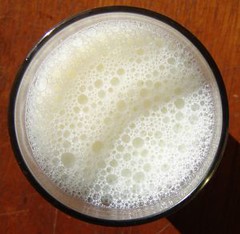 Frothing is probably the most underappreciated part of coffeehouse culture. After all, without the foam, your cappuccino or latte is just plain espresso. It takes a little practice for even the best baristas to get the knack. Let us take a little dive into the art of frothing.
 At the beginning of the 20th century an Italian by the name of Luigi Bezzera developed a machine that used the air pressure resulting from trapped steam to force water through ground coffee (this, as opposed to gravity doing the work). The strainers used in Bezzera's machine were of the single cup variety, similar in size and concept to the strainers of today's espresso makers -- the little metal cups that hold tamped-down grounds and screw tight into their receptacles.
 "Hard" water is alkaline water and though the basic nature does not harm flavor or aroma, it will neutralize some of the natural acids in your coffee and you will end up with a blander brew. It is generally agreed that water containing 50 to 100 parts per million of dissolved minerals will produce the best tasting coffee.

